
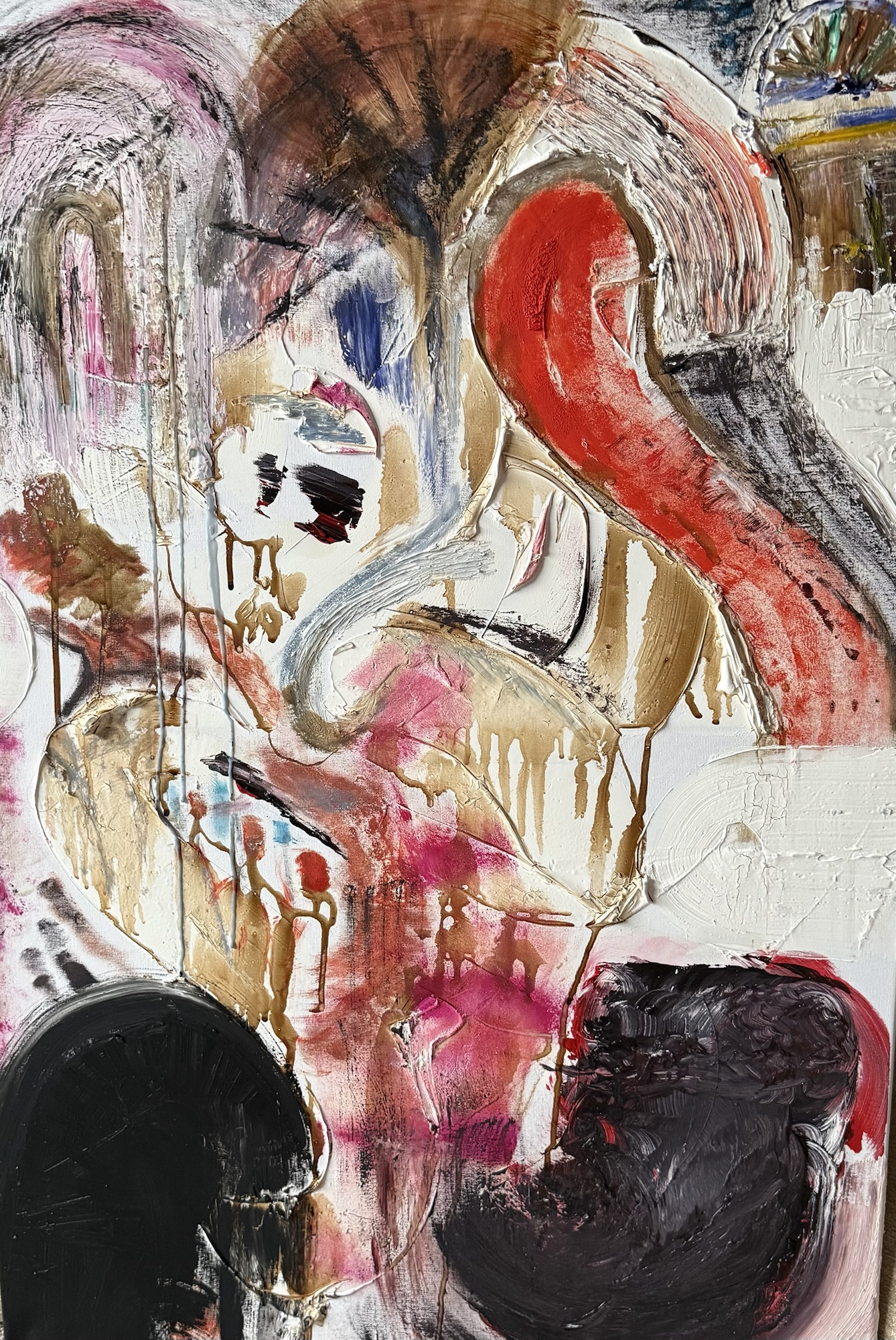
The intersection of art and spirituality has been a source of fascination for centuries, and among the most profound frameworks for this dialogue is Sufism. Beyond its theological and mystical dimensions, Sufism offers a methodology for perceiving and expressing reality that resonates deeply with artistic practice. For the visual artist, it provides a lens through which form, color, rhythm, and gesture are not merely aesthetic decisions but reflections of the unseen, the infinite, and the subtle vibrations of existence.
At its core, Sufism is a path of inner exploration and transcendence. It emphasizes the cultivation of awareness, the dissolution of egoic boundaries, and the attunement to a greater unity. When translated into artistic practice, these principles encourage an engagement with materials and techniques that prioritize intuition, spontaneity, and the harmonization of opposites. In this sense, the act of creation becomes a meditative exercise: a dialogue between the artist’s internal state and the external world.
The Sufi understanding of symbolism is particularly influential in shaping an artistic methodology. Every form, line, or color can serve as a conduit for higher meaning, a reflection of spiritual truths that are otherwise ineffable. Abstract forms, therefore, are not merely departures from representation; they become vessels for exploring metaphysical relationships, embodying the tension between the visible and the invisible. This philosophical grounding transforms the canvas into a space where contemplation and aesthetic experience converge.
Rhythm and repetition, central to many Sufi practices, translate seamlessly into artistic processes. The repeated gesture, the layering of textures, the modulation of color and line, all mirror the iterative patterns of spiritual practice. Each mark on the canvas carries the weight of attentiveness and presence, echoing the Sufi belief in the constant remembrance of the divine. In this framework, the work of art is not simply a finished product but a trace of ongoing awareness.
Furthermore, Sufism emphasizes the principle of subtle perception: seeing beyond the surface, recognizing the hidden harmonies that govern form and being. Artists aligned with this approach cultivate a sensitivity to the interstitial spaces, the silent pauses, and the negative spaces that structure perception. In doing so, the work itself becomes an invitation to attune the viewer to subtle energies, fostering an experiential understanding that surpasses literal interpretation.
This approach to art also fosters a dialogue between tradition and innovation. While Sufism is deeply rooted in centuries of mystical thought and aesthetic expression, it encourages the practitioner to engage with the present moment authentically. The artist, guided by Sufi principles, navigates the balance between inherited forms and personal intuition, allowing spiritual insight to inform technique, composition, and conceptual framing.
In addition, the Sufi emphasis on detachment and surrender resonates profoundly with artistic exploration. By cultivating an openness to chance, to accidents in the medium, and to spontaneous movements of the hand, the artist aligns with the Sufi path of relinquishing control. Each deviation or unexpected mark becomes a teaching, a revelation of the unseen forces at play, echoing the notion that creativity is not solely the product of the ego but a co-creation with the universal rhythm.
Light, shadow, and spatial perception are other areas where Sufi principles inform artistic methodology. The mystic’s focus on illumination as both a literal and metaphorical phenomenon encourages an attentive observation of how light interacts with form, revealing hidden dimensions. Artists guided by this perception approach composition as an exploration of both what is visible and what is hinted at, creating works that evoke a sense of depth beyond the physical plane.
The notion of impermanence and transformation, central to Sufi thought, also informs material experimentation. Artists are encouraged to explore processes that allow materials to evolve, change, or decay, reflecting the transient nature of existence. Techniques such as layering, erasure, and controlled destruction become not merely technical choices but philosophical statements about the fluidity of life and the ephemerality of experience.
Furthermore, the Sufi embrace of multiplicity and unity inspires a unique approach to composition. Rather than seeking rigid symmetry or predictable patterns, the artist allows forms to interweave organically, reflecting the interconnectedness of all things. Color palettes, shapes, and spatial arrangements become manifestations of a holistic vision, where every element maintains its individuality yet contributes to the unity of the whole. This mirrors the Sufi understanding that all manifestations are reflections of a singular divine essence.
Music and rhythm, often integral to Sufi practice through instruments and chanting, can also influence visual language. The flow of brushstrokes, the cadence of repeated marks, and the dynamic interplay of visual elements can emulate musical patterns, creating a synesthetic experience where sight and sound converge in the viewer’s perception. This intersection enriches the work, giving it a meditative, almost sonic quality that resonates with spiritual resonance.
Another critical dimension is the cultivation of patience and attentive observation. Sufi methodology trains the practitioner to witness subtleties, to linger in moments that might otherwise be overlooked. In the studio, this translates into a meticulous attentiveness to material behavior, to the emergent qualities of color, texture, and form. The resulting work carries a depth that stems from prolonged engagement and sustained mindfulness, allowing viewers to encounter layers of perception rather than a singular, immediate impression.
Importantly, the ethical dimension of Sufi practice—compassion, humility, and service—also resonates within an artistic framework. Art created from a Sufi-inspired perspective is not merely an act of personal expression but a form of offering, a means to elevate consciousness and touch the hearts of others. The work invites empathy, reflection, and participation, extending the spiritual ethos beyond the artist to the community of viewers.
In conclusion, approaching art through the lens of Sufism provides a rich, multidimensional framework for creation. It transforms the artistic process into a meditative journey, a reflection on unity, and a dialogue with unseen energies. The principles of subtle perception, rhythm, detachment, and interconnectedness infuse the work with a depth that transcends the purely visual, fostering an experience that is simultaneously aesthetic, emotional, and spiritual. Through this path, art becomes not merely a practice of making but a lived embodiment of a spiritual journey.
Ultimately, the Sufi approach encourages the artist to perceive the studio as a sacred space, the materials as instruments of discovery, and the act of creation as a means of attunement to the universal. In this sense, art is inseparable from life, each mark a reflection of inner contemplation, each composition a manifestation of harmony between the tangible and the intangible. By integrating these principles, the artist not only produces work of aesthetic significance but also participates in the timeless pursuit of transcendence and understanding that lies at the heart of Sufi practice.
Therefore, Sufism as an artistic path is less about prescribed forms or styles and more about cultivating a way of seeing, sensing, and engaging with the world. The artist becomes a vessel through which spiritual insight is communicated, an interpreter of the subtle harmonies that exist beyond ordinary perception. This approach bridges the temporal and the eternal, the material and the spiritual, offering a framework in which every act of creation is simultaneously an act of devotion and exploration.
In embracing this path, the contemporary artist aligns with a lineage of seekers and visionaries who have long recognized the inseparability of beauty and transcendence. Sufism, therefore, is not merely a subject of intellectual study but a living methodology that can shape the rhythm, intention, and impact of artistic work. By adopting its principles, artists cultivate an awareness that permeates every choice, from composition to gesture, from texture to color, ultimately producing work that resonates with the subtle, enduring harmonies of existence.