The Vessel of the Invisible
Abstraction as Spiritual Praxis
In the contemporary landscape of visual arts, abstract painting occupies a unique space that bridges the tangible and the ineffable. It is a medium where color, form, and texture transcend representational constraints, allowing an intimate dialogue of perception and emotion. From my vantage point as a fine artist, abstraction is not merely an aesthetic exercise but a vessel for spiritual exploration, deeply intertwined with the sensibilities of Sufism.
Sufism, the mystical dimension of Islam, emphasizes the direct experience of the divine through introspection and the dissolution of the ego. Central to its philosophy is the belief that the material world is a reflection of higher realities; thus, true understanding is accessed through internal contemplation. In this context, abstract art embodies the capacity to convey the unseen—translating subtle spiritual vibrations into form and inviting the viewer into a space of quiet introspection.
The Language of Abstraction
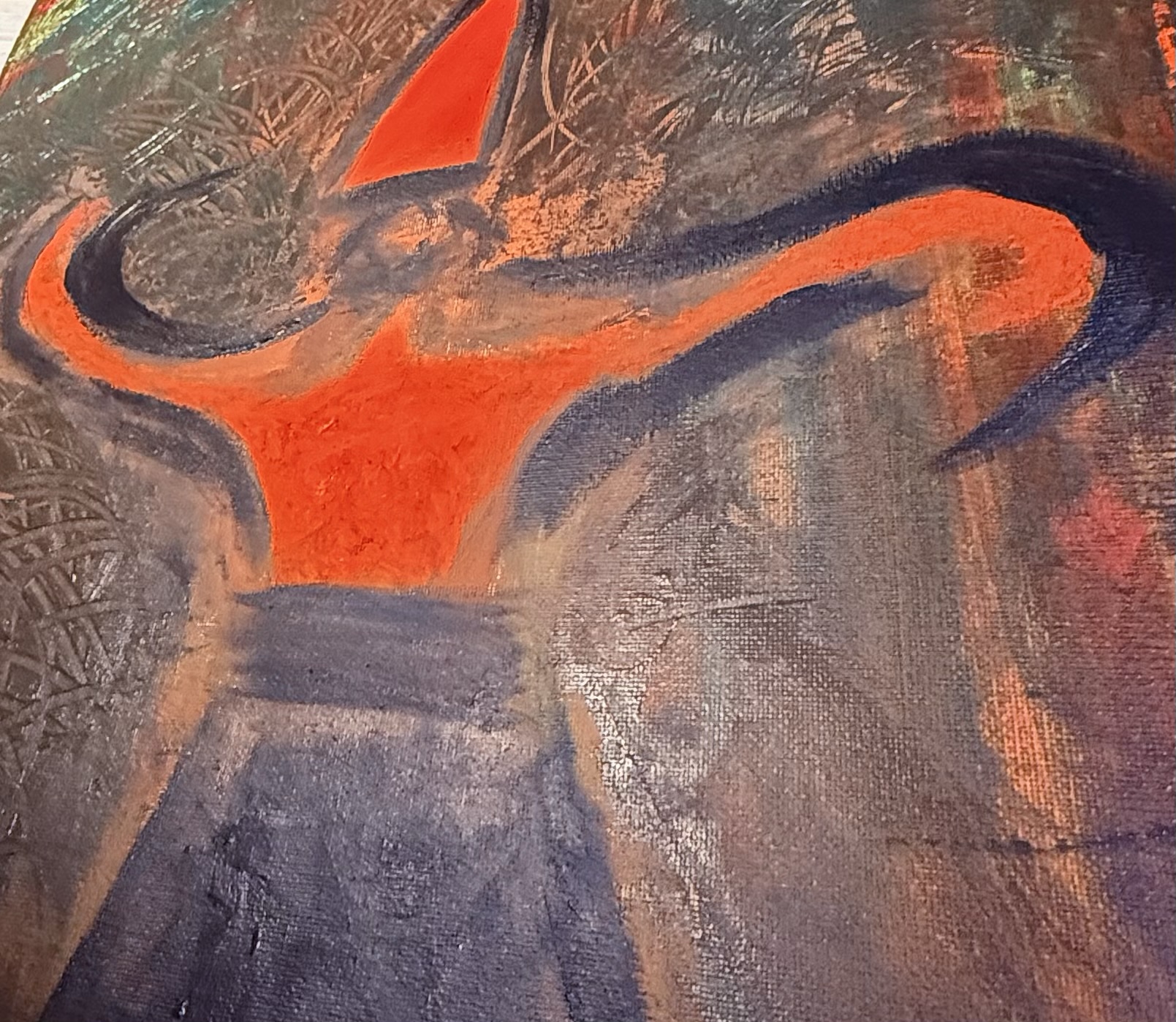
Abstract art is a “language without words,” communicating through nuance and rhythm rather than explicit narrative. In my engagement with abstraction, I have observed that certain visual motifs—repeated arcs, spiraling lines, pulsating textures—evoke the subtle energies described in Sufi cosmology. Just as a dervish whirls to dissolve the boundaries of self, the abstract composition dissolves conventional spatial hierarchies, allowing movement and balance to convey a deeper order.
Color and Resonance
Color functions far beyond its decorative role; it is a conduit of spiritual vibration. Vibrant reds, luminous golds, and deep blues are deliberate engagements with energetic qualities. The layering and transparency of pigments create a rhythm that mirrors the cycles of spiritual experience: emergence, dissolution, and renewal. In this sense, abstract composition is akin to a visual dhikr—a remembrance and repetition that invites reflection on the unseen order.
The Space of Potential
One of the defining features of my work is the embrace of negative space. These empty areas are not voids, but active presences—spaces of potential. This aligns with Sufi metaphysics, which regards emptiness as a fertile ground for divine manifestation. The interplay between form and void mirrors the continuum between the manifest and the unmanifest, the known and the unknowable.
“Meaning is not imposed but discovered; beauty is inseparable from insight.”