Introduction: The First Line Against the Noise
When a child who has barely completed their second year wraps their tiny fingers around a heavy wooden crayon, or dips small hands with startling randomness into a pot of liquid gouache, they are not merely making a “cute mess” to pass the time. Without knowing it, they are engaging in a ritual older than written language: the ritual of reinventing reality.
In the rush of contemporary parenting, art supplies are frequently relegated to the periphery—treated as harmless diversions, rainy-day distractions, or recreational accessories designed to keep little ones quiet. This superficial view entirely misses the radical role of aesthetic education in forming a human being. Introducing children to art and painting from their earliest days is not an optional luxury; it is an absolute educational and moral responsibility, and an inescapable existential duty.
I. The Philosophy of Aesthetic Becoming (The Aesthetics of Becoming)
To grasp the depth of this need, we must break free from traditional philosophies that confine art to quiet museums and framed gallery walls. Art in early childhood is not a finished product measured by technical precision; it is an instrument for self-realization and the expansion of consciousness.
- Consciousness of Space and Boundaries: When a child draws, they are testing their relationship with the white expanse for the very first time. The accidental circle they scratch onto the page is their first declaration of sovereign existence: “I am here, and this is my mark upon the universe.”
- Translating Silence into Form: Children experience overwhelming, complex emotions that the limited vocabulary of a two- or three-year-old cannot possibly capture or articulate. Here, color and line step in as a philosophical substitute for speech. Anger hardens into a sharp black stroke; joy dissolves into a wash of warm yellow.
II. From Scribbled Pages to the Childhood Easel (A Lived Reflection)
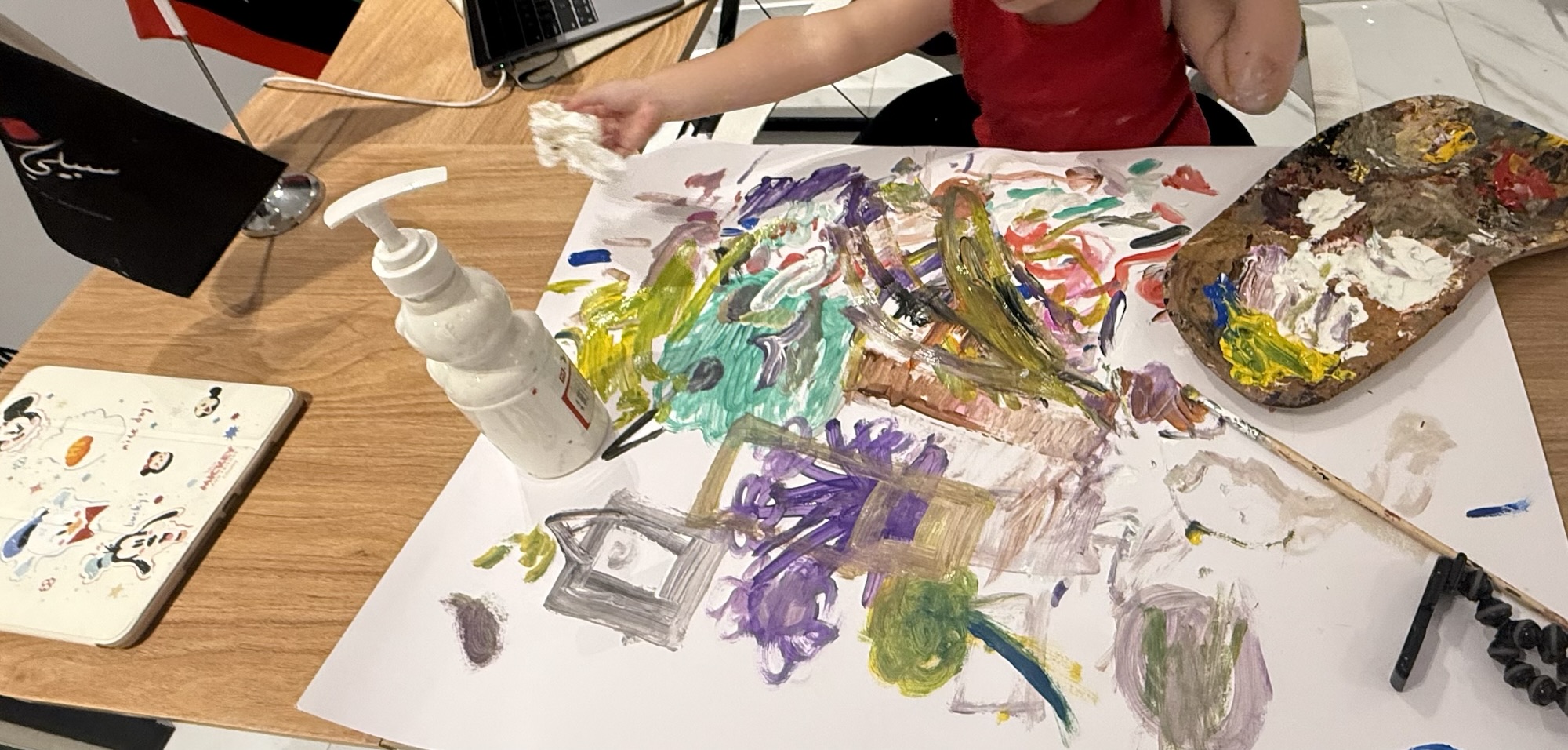
I understand this truth profoundly when I watch my two-year-old daughter stand before her paper canvas. In these tender years, there are no rules and no constraints—only absolute freedom and a courageous confrontation with the blank page.
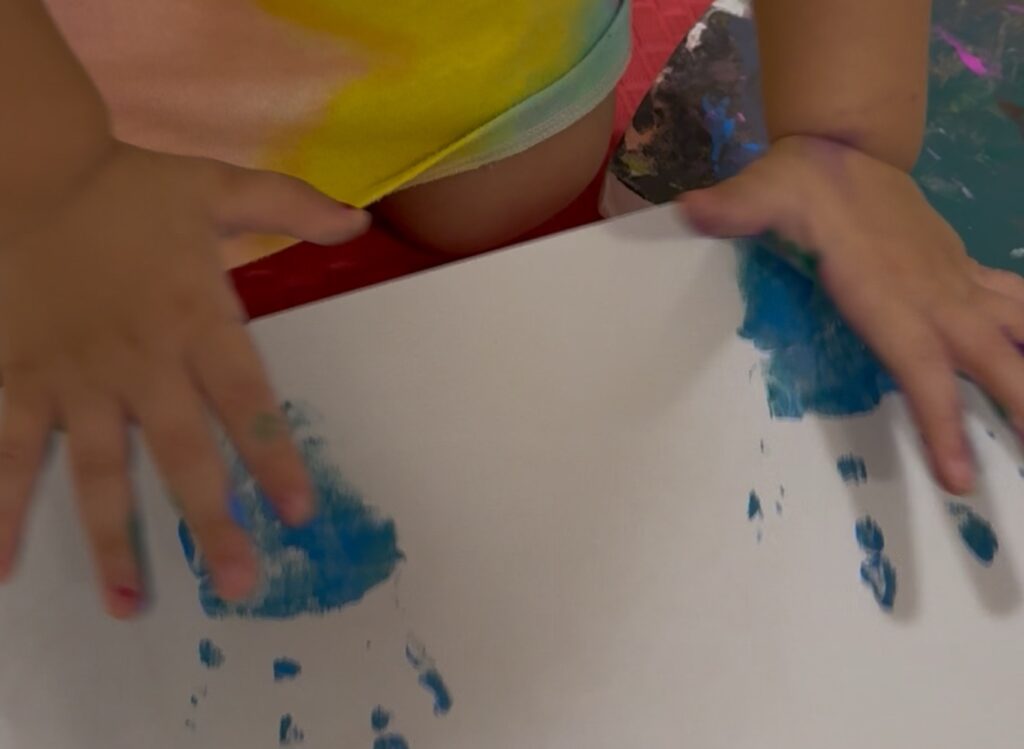
When my daughter blends blue and yellow to watch green emerge before her eyes, she does not merely look like she is playing. She looks like a tiny scientist discovering the laws of physics and chemistry through her own soul before her mind can name them. It is a moment of pure, unadulterated wonder. The paint-stained fingers and the clothes bearing the evidence of experimentation are not signs of disorder; they are the badges of honor belonging to the journey of human exploration.
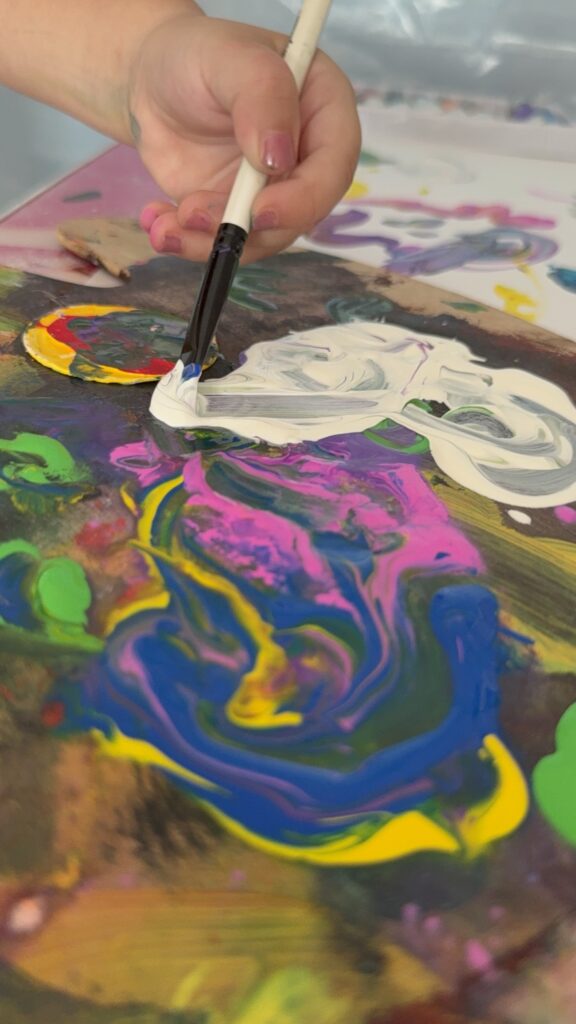
When we grant our children the right to leave a tangible, physical mark on the world, we stop suppressing them and instead hand over the deed to their own independent souls.
III. Liberation from the Prison of Perfectionism and Rigid Logic
Our modern world is governed by algorithms, ready-made answers, and rapid, precise outcomes. Traditional schooling frequently trains the mind to replicate patterns rather than invent them, cultivating a deep fear of error long before it encourages genuine experimentation.
- The Death of the Fear of Failure: On a sheet of drawing paper, there is no such thing as a “wrong answer.” A mistake in art is not a punishable offense; it is an unexpected pivot leading to a new composition. A child who learns to embrace an accidental smudge as part of the design is a future adult who possesses the psychological resilience to navigate life’s unpredictable turns.
- Slow Attention: In an era dominated by glowing screens that bombard the brain with fast, fragmented clips, art functions as a slow, grounding balm for the nervous system. The act of choosing a color, waiting for a wash to dry, and observing how light hits a painted surface retrains a child’s neurological wiring for patience, contemplation, and inner depth.
IV. Parental Responsibility and the Trap of “Cheap Praise”
Our role as parents goes far beyond buying a cheap box of watercolors, handing them over, and walking away. The true responsibility lies in how we show up for this creative output.
Falling into the trap of automatic, commercial praise (such as instantly exclaiming, “Good job! That’s so pretty!”) teaches a child to perform for external applause rather than internal truth. A deeper philosophy requires us to be curious companions on their journey:
- Ask about their feelings rather than the literal shape of the drawing: “How did it feel when you used this dark color here?”
- Honor the process and keep it sacred, entirely independent of the final visual outcome.
Conclusion: Carving the Stamp into the Wall of Existence
Raising our children on art and painting is not an extra layer of luxury added to modern parenting; it is a life-raft protecting them from spiritual aridity and blind consumption. We raise them in art to give them a language that saves them when words fail, and a living pulse that reminds them they are the true artists of their own lives.
Grant them the space. Place the brush in their small, trembling hands, let the tables get messy and the paper fill with beautiful madness, and watch quietly and bravely as their tiny fingers build the cathedrals of the soul in silence and splendor.